AI Search Optimization Tools: What I Learned
I was on a call with a marketing friend last month.
She mentioned something that stopped me mid sentence.
She said half her traffic now comes from people who never even clicked a link. They just read an AI answer and moved on.
I asked her how she even tracks that.
She laughed and said thats exactly why she started using AI search optimization tools in the first place.
That conversation sent me down a research hole for the next few days.
Here is everything I found out about AI search optimization tools and why they matter right now.
What Are AI Search Optimization Tools?
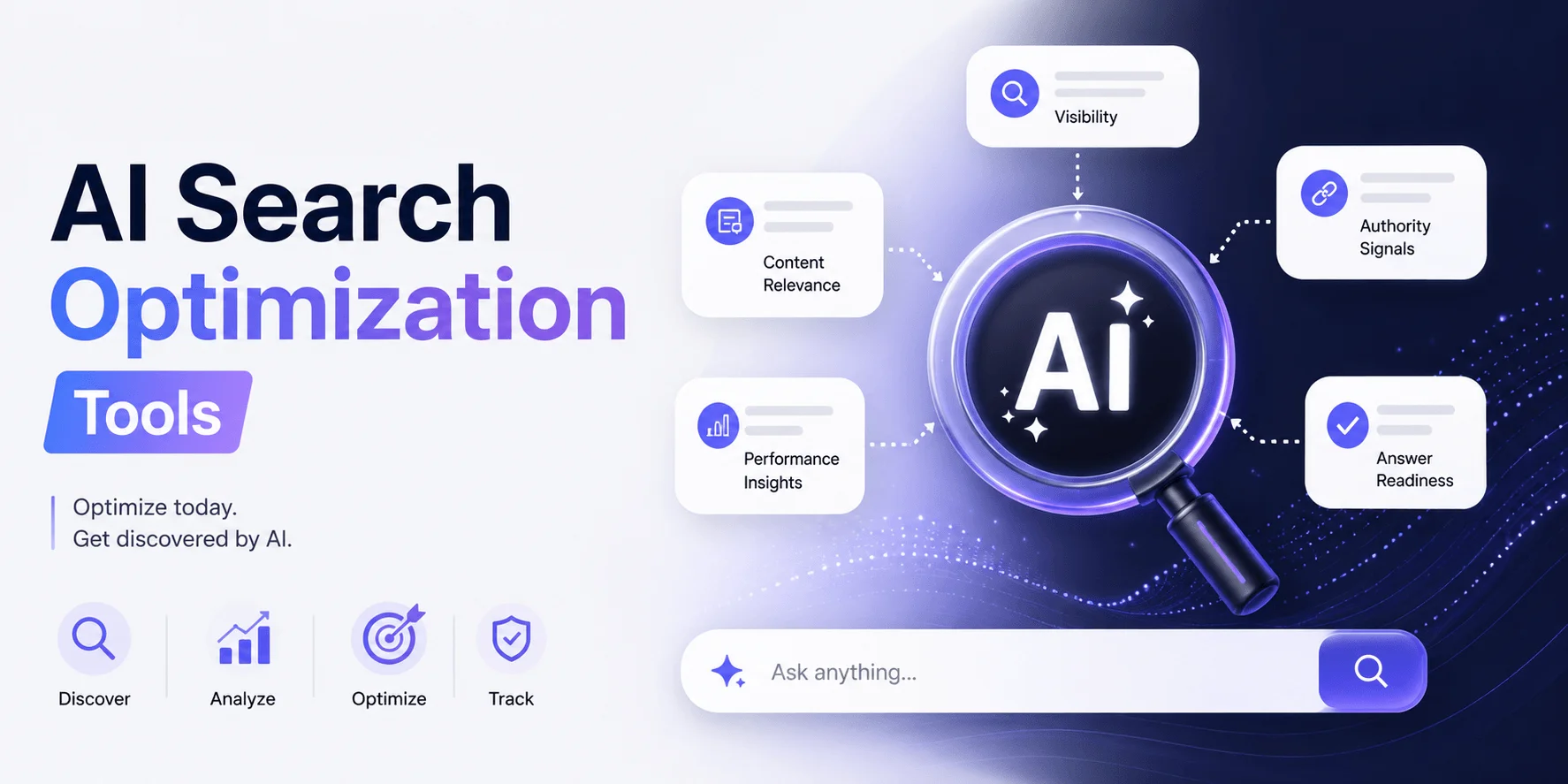
AI search optimization tools help your content show up inside AI generated answers.
Not just search results. Actual answers.
Think ChatGPT, Google AI Overviews, Perplexity, and similar tools that give people one direct answer instead of ten blue links.
These platforms help you structure content, track mentions, and figure out whether AI systems are actually citing your brand.
I always assumed this was just regular SEO with a new name. Turns out I was wrong.
How Is AI Search Optimization Different From Regular SEO?
Regular SEO chases rankings and clicks.
AI search optimization chases something different. It chases mentions and citations inside AI answers.
We used to only care about showing up on page one. Now we also care about whether an AI model picks our content as its example.
Here is a quick breakdown of how the two compare based on what I found while researching this.
What You Care About | Traditional SEO | AI Search Optimization |
|---|---|---|
Main Goal | Rank higher and drive clicks | Get mentioned or cited inside AI answers |
Who Reads It | Humans scanning search results | AI systems assembling an answer |
What Gets Measured | Rankings, traffic, click through rate | Mentions, citations, share of voice |
Content Style | Long articles, keyword pages | Short, direct, clearly structured answers |
Main Focus | Backlinks, page speed, keywords | Clarity, consistency, structured formatting |
Seeing it laid out like this made everything click for me way faster than reading paragraph after paragraph.
Why I Started Caring About This So Suddenly
I always thought AI answers were just a side feature people barely used.
Then I found out how many people actually search this way now.
We are talking about a huge chunk of daily searches that never even reach a normal results page anymore.
That number alone changed how seriously I take this.
If people arent clicking through to a results page, we need our content sitting inside the answer itself.
What Makes A Good AI SEO Platform?
I tested a handful of tools while writing this and noticed a pattern.
The good ones all share a few common traits.
They track where your brand shows up across different AI models
They flag content that isnt structured clearly enough to get cited
They show competitor mentions so you know where you stand
They give practical suggestions instead of vague scores
If a tool skips most of these, I move on pretty quickly now.
AI SEO Tools I Actually Look Into Before Trusting
Not every AI SEO software out there does what it claims.
Some just repackage old keyword tools with a new label slapped on top.
The tools worth using actually test real prompts across different AI models and show you when your brand gets mentioned.
That distinction matters way more than I expected going into this.
AI Content Optimization Tools And What They Actually Do
This part surprised me the most.
AI content optimization tools dont just check your keyword density anymore.
They check whether your first two sentences under a heading actually answer the question clearly enough for a model to lift and quote.
We used to write intros to hook a reader. Now we also write them to be extractable by a machine.
That shift felt strange at first, but it makes sense once you think about it.
How AI Keyword Research Tools Changed My Content Planning
I used to just plug a keyword into a tool and get search volume back.
AI keyword research tools do way more than that now.
They show you the actual questions people ask AI assistants, not just what they type into a search bar.
Those two things are surprisingly different.
We plan our content around real questions now instead of just chasing high volume keywords that dont match how people actually talk to AI tools.
AI Website Optimization Tools For The Technical Side
This is the part most people skip, including me at first.
AI website optimization tools help with stuff like schema markup, site speed, and making sure your content isnt hidden behind heavy scripts.
If an AI model cant actually read your page, it cant cite it. Simple as that.
I went back and checked a few of my own pages after learning this and found some embarrassing gaps.
AI Search Engine Optimization And Tracking Where You Show Up
Tracking used to mean checking your ranking position every morning.
Now AI ranking tools let you test actual prompts and see if your brand gets named in the response.
I tried this myself with a few topics I write about and it was pretty eye opening how often competitors showed up instead of me.
That alone told me exactly where I needed to improve.
Can Small Sites Compete With Big Names Using AI SEO Tools?
This was the question I cared about most going into this research.
Traditional SEO makes it hard for smaller sites to compete against huge established brands.
AI search optimization works a little differently though.
AI models care more about clear, well structured answers than they care about domain size.
A short, well written definition from a smaller site can outperform a massive guide from a huge publication if its easier for the model to lift and quote.
That gave me a lot more hope than I expected.
My Checklist For Choosing AI Optimization Tools
After testing several of these, I built a short list of things I look for now.
Tracks mentions across multiple AI models, not just one
Gives clear suggestions instead of confusing scores
Helps with both content structure and technical setup
Updates regularly since AI models change fast
If a tool checks most of these boxes, it earns a spot in my toolkit.
Why Consistency Matters More Than I Thought
Here is something I completely missed at first.
AI models dont just trust the first thing they read about you.
They look for the same claim showing up across multiple places before they treat it as reliable.
If your website says one thing and your social profiles say something slightly different, that confuses the model.
We assume one solid page is enough, but AI systems actually want to see agreement across different sources before they trust any of it.
Once I understood this, I went back and cleaned up a bunch of inconsistent info across my own profiles.
Artificial Intelligence SEO Tools For Off Site Presence
This part gets ignored way too often.
Artificial intelligence SEO tools dont just look at your own website.
They also track how your brand gets mentioned across forums, review sites, and other platforms your audience actually spends time on.
I never thought about Reddit threads or review sites as part of my SEO strategy before this.
Turns out those spaces feed directly into how AI models decide whether to trust and cite a brand.
We cant control everything people say about us, but showing up consistently across these spaces helps a lot more than I expected.
SEO AI Tools Versus Manual Tracking
I used to manually search different questions just to see if my content showed up anywhere in an AI answer.
That took forever and barely covered a fraction of what I actually wanted to check.
SEO AI tools automate that whole process for you.
They run dozens of prompts across different models and show you exactly where you stand.
I stopped doing manual checks completely once I saw how much time this saved me.
AI Tools For SEO And Content Planning Together
I used to treat content planning and SEO tracking as two completely separate tasks.
Now the better AI tools for SEO combine both into one workflow.
You get keyword and question research on one side, and citation tracking on the other, all inside the same dashboard.
That combination alone cut down so much back and forth between different tools I used to juggle.
We waste a lot of time switching between tabs and tools that dont talk to each other. This fixed that for me.
Getting Started With AI Optimization Tools Without Feeling Overwhelmed
I know this can feel like a lot all at once.
Here is how I actually started, step by step.
I picked one AI SEO platform instead of trying five at once.
I ran a few test prompts around topics I already write about.
I checked where I showed up and where I completely missed.
I fixed the most obvious gaps first, like unclear headings and missing direct answers.
Small steps like that made the whole thing feel way less intimidating than I expected going in.
Common Mistakes People Make With AI SEO Software
I made a few of these myself during testing.
Assuming AI search optimization is just SEO with extra steps
Ignoring technical setup like schema and page speed
Writing vague answers instead of short direct ones
Only tracking one AI model instead of several
Learn from what I got wrong so you dont waste time repeating it.
FAQs
What is AI search optimization?
Its the practice of structuring your content so AI tools can find, understand, and cite it inside their answers.
Do I need AI SEO tools if I already do regular SEO?
Regular SEO still matters, but AI SEO tools help you get cited inside AI answers too.
Is AI search optimization only for big brands?
No. Clear, well structured content from smaller sites can perform just as well.
What should I look for in an AI SEO platform?
Look for tools that track multiple AI models and give clear, practical suggestions.
How long does it take to see results from AI search optimization?
It varies, but consistent structured content usually shows results within a few months.
Final Thoughts
I went into this research expecting a small side topic.
Instead I found something that is already reshaping how we think about content.
We used to write purely for rankings. Now we also write to get picked as the answer itself.
AI search optimization tools made that whole process way less confusing for me.
If you create content regularly, this is worth paying attention to now instead of waiting until everyone else already figured it out.
What I Plan To Do Next
I am not switching my whole strategy overnight.
I am just adding AI search optimization on top of what I already do for regular SEO.
Same content, just structured a bit differently so both humans and AI models can actually use it.
We dont need to throw out everything we already know about SEO. We just need to build on top of it.
That feels like the smartest way to approach this shift without burning out trying to relearn everything at once.